
Termites do not knock on your door and announce themselves. They work quietly, behind walls, under floors, inside timber beams, and by the time you notice something is wrong, the damage is often already done. That is why understanding how termite control actually works can save you a lot of stress, and a lot of money, down the track.
At 7 States Pest Control, we get called out to homes across Melbourne every week for termite inspections. Some are routine checks. Others are homeowners who spotted something strange and want answers fast. Either way, the process we follow stays the same, careful, thorough, and based on real evidence, not guesswork.
In this post, we are going to walk you through exactly what happens during a real termite control Melbourne job, using photos taken during one of our actual inspections. No stock images, no generic diagrams, just the real thing.
Step 1: Looking for the Signs
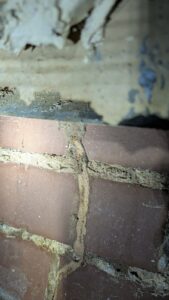
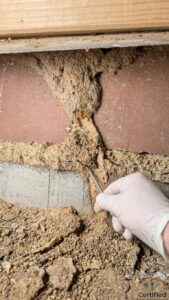
Every job starts the same way, with a close look at the property. Termites leave behind clues if you know where to check. One of the biggest giveaways is mud tubes. These are thin trails of soil and saliva that termites build to travel safely between the ground and the timber they are feeding on.
In the photo below, you can see exactly what this looks like along a brick foundation. That thin raised line running down the brickwork is a termite mud tube, and it is one of the clearest signs of activity.
These tubes protect termites from light and predators while they move between their nest and your home. Spotting one like this during an inspection tells our technicians exactly where to dig deeper.
Step 2: Tracing the Trail
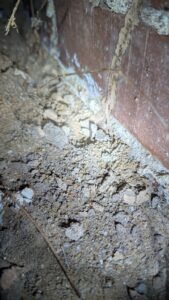
Once a mud tube is found, the next step is to follow it. Termites are creatures of habit, and their tubes usually lead somewhere specific, often up a wall, through a subfloor, or straight into a timber frame.
This kind of tracing work takes a trained eye. It is easy to miss a thin tube if you are not looking closely, which is one of the biggest reasons DIY termite checks often miss the real problem. Our technicians know exactly what to look for and where termites are most likely to be hiding.
Step 3: Checking the Timber
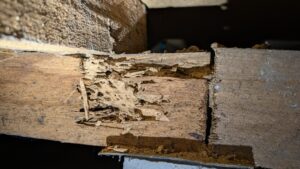
This is usually the moment that tells the full story. Once we open up or inspect the timber near an active tube, we can see how much damage has already happened. In the photo below, you can see what termite feeding actually does to a timber beam over time. The wood becomes soft, hollow, and layered, almost like it has been chewed from the inside out.
This is exactly why early detection matters so much. Timber like this loses its strength. Left untreated, it can affect the structural safety of a home, not just the look of it.
Step 4: Confirming Live Activity
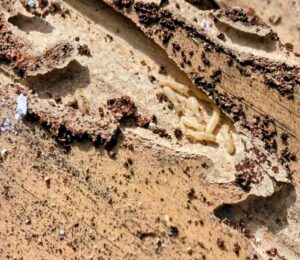
Finding damage is one thing. Finding live termites is another, and it is an important part of confirming an active infestation rather than old, inactive damage. During this inspection, our team found live termites still feeding inside the timber.
Seeing termites like this confirms the colony is active nearby. This is the point where a proper termite treatment Melbourne plan becomes essential, not optional.
Step 5: Careful, Hands On Inspection
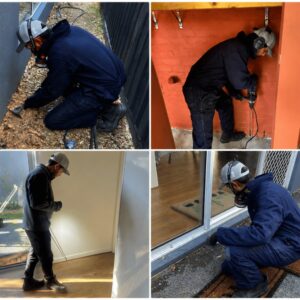
Termite work is not something you rush. Our technicians use specialised tools to gently probe timber and mud tubes to understand how deep the activity goes, without causing unnecessary damage to your property.
This hands on approach is part of what makes proper termite control Melbourne services different from a quick surface level look. It is slow, deliberate work, and it makes a real difference to the accuracy of the report you get at the end.
Step 6: Planning the Right Treatment
Once the inspection is done, we do not just hand over a generic treatment plan. Every property is different. The type of termite, the extent of damage, the construction of the home, and the location of the nest all affect the approach we recommend.
Common treatment methods include chemical soil barriers, baiting systems, and direct treatment of affected timber. In many cases, a combination of methods works best, especially if the infestation has been active for a while.
This is where experience really counts. A proper termite treatment Melbourne plan is not about spraying something and hoping for the best. It is about targeting the colony itself, not just the visible signs.
Step 7: Follow Up and Prevention
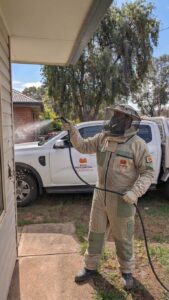
Termite treatment does not stop the day the chemicals go down. Follow up checks are a normal part of the process, especially in the months after treatment, to make sure the colony has been dealt with properly and is not rebuilding somewhere nearby.
We also talk to homeowners about simple things they can do around the property to reduce future risk, like managing moisture near the foundation, removing old timber or mulch touching the house, and keeping an eye out for any new mud tubes.
Why DIY Termite Checks Often Fall Short
We understand the temptation to check things yourself before calling a professional. But termites are experts at staying hidden. A tube like the one in image one might look small and harmless, yet it can lead to a nest that has already caused serious damage inside your walls.
Without training, it is easy to miss the smaller signs, or worse, disturb a tube without realising the termites will simply relocate and continue feeding somewhere else in the house. This is exactly why proper termite control should always involve a licensed and experienced team.
Why Choose 7 States Pest Control
At 7 States Pest Control, we do not rely on guesswork. Every inspection follows the same careful process you have just seen, from spotting mud tubes to confirming live activity and mapping out a treatment plan that actually works for your home.
Our team has handled everything from early stage detections to homes with significant structural damage, so whatever stage your termite problem is at, we know how to approach it properly.
Termites are patient, and they do not stop on their own. The earlier they are found, the less damage they cause, and the easier the treatment becomes. If you have noticed anything that looks like the mud tubes or timber damage in the photos above, do not wait for it to get worse.
Our termite control Melbourne team is ready to inspect your property properly, explain exactly what we find, and put together a termite treatment Melbourne plan that protects your home for the long run.
Book a termite inspection with 7 States Pest Control today and get real answers, not guesswork.
Choose expert pest control Melbourne services for complete pest management. We specialize in spider control services and fast spider removal service. Our team also provides fox population control and trusted possum removal service Melbourne. Protect your property with advanced termite control Melbourne and reliable termite treatment Melbourne.