
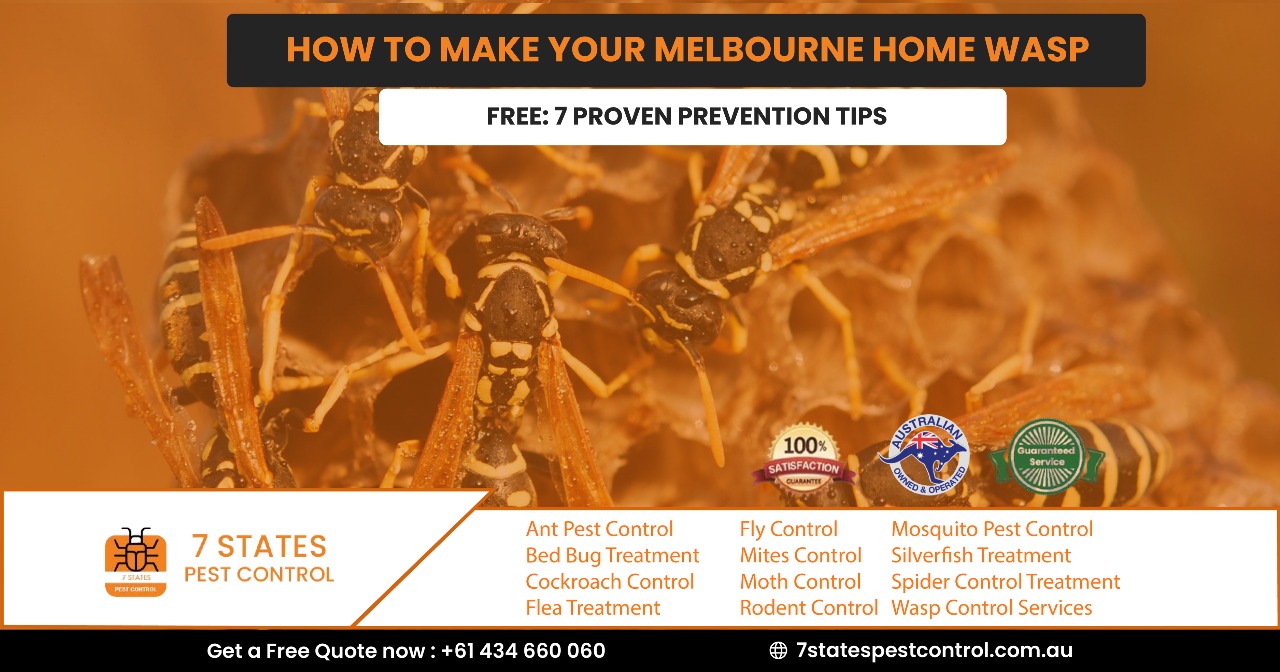
In Melbourne, wasps are more than just an occasional backyard nuisance. They are a frequent problem, particularly from late spring through early autumn when the warmer weather encourages them to become more active.
With plenty of food sources and nesting spots in suburban gardens, outdoor eating areas, and roof spaces, wasps can quickly turn your peaceful home into a risky environment.
The problem with wasps isn’t only that they are annoying.
They can be aggressive when threatened, delivering painful stings that may lead to severe allergic reactions in some people.
Pets are also at risk if they try to chase or bite a wasp. Beyond health concerns, a wasp infestation can make it uncomfortable or even unsafe to enjoy your garden, balcony, or patio.
Removing an established wasp nest can be dangerous and is best left to professionals. That’s why prevention is both safer and more cost-effective than dealing with a full infestation.
In this blog , you’ll find practical steps to keep your property safe, along with advice on when to seek expert help for wasp nest control Melbourne services.
Why Wasp Control is Essential in Melbourne
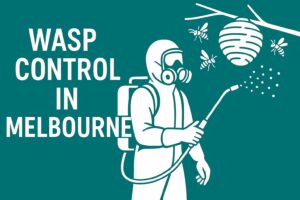
Melbourne’s climate creates the perfect environment for wasps to thrive. They become most active in spring and summer, building nests and searching for food.
The European wasp, one of the most aggressive species, is especially common in the area, along with paper wasps and mud daubers.
There are several important reasons to keep wasps under control:
- Health risks: Wasp stings are painful and can cause swelling, redness, and in severe cases, anaphylaxis.
- Pet safety: Dogs and cats may get stung if they disturb a nest or chase wasps.
- Property disruption: A nest near a doorway, roof eave, or garden can make those areas unsafe to use.
For these reasons, regular monitoring and preventive measures are essential for keeping your home and family safe.
Tip 1: Keep Food Sources Covered
One of the main reasons wasps come near homes is food. They are drawn to sweet and protein-rich foods, making outdoor meals, rubbish bins, and even pet bowls potential targets.
To reduce their interest:
- Keep food covered during outdoor picnics or barbecues.
- Store pet food indoors when it’s not being eaten.
- Close and secure compost bins.
By removing easy access to food, you make your property less appealing to wasps and reduce the chance of them hanging around.
Tip 2: Seal Entry Points Around the Home
Wasps often look for sheltered places to build nests, such as wall cavities, roof spaces, and under eaves. Even small gaps can be enough for them to get inside.
To prevent this:
- Check around windows, doors, and rooflines for openings.
- Install fine mesh screens over vents.
- Use sealant to close cracks in walls and gaps in timber.
Doing this in early spring is particularly useful because it prevents wasps from starting a nest in the first place.
Tip 3: Maintain Your Garden Regularly
A messy or overgrown garden can be very inviting to wasps. Dense shrubs, tall grass, and fallen fruit can all encourage them to settle nearby.
Good garden maintenance includes:
- Pruning trees, hedges, and bushes.
- Removing fallen fruit and flowers promptly.
- Clearing away piles of wood, leaves, or debris where wasps might hide.
Not only does this make your yard look tidier, but it also removes many potential nesting spots.
Tip 4: Avoid Strong Fragrances Outdoors
Wasps are sensitive to smell and are attracted to certain scents, including perfumes, scented body sprays, and some types of flowers.
If you plan to spend time outdoors:
- Avoid wearing strong fragrances.
- Choose unscented candles instead of heavily perfumed ones.
- Be aware that bright, floral patterns can also attract them.
By reducing scent-based attraction, you make your outdoor spaces less interesting to wasps.
Tip 5: Secure Outdoor Rubbish Bins
Rubbish bins are one of the biggest wasp attractants, especially if they contain food scraps. If wasps find your bin, they’ll return regularly.
Prevent this by:
- Using bins with tight-fitting lids.
- Rinsing bins often to remove food smells.
- Storing bins away from main doors and windows.
A clean, sealed bin is much less likely to become a wasp hotspot.
Tip 6: Install Wasp Deterrents
If you live in an area with frequent wasp problems, deterrents can help prevent nesting.
Common deterrents include:
- Fake wasp nests: Since wasps are territorial, they often avoid areas where they think another colony exists.
- Natural repellents: Essential oils such as peppermint and clove may work as mild repellents.
- Traps: These can help reduce numbers but should be placed away from areas where people gather.
While deterrents can help, they are not a guaranteed solution and won’t remove an existing nest. For active nests, professional wasp nest control Melbourne services are recommended.
Tip 7: Schedule Regular Professional Inspections
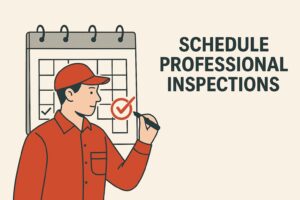
Even with all the right prevention measures, wasps can sometimes find a way to build a nest on your property. Professional inspections can catch problems early before they become a serious risk.
An expert inspection can:
- Identify wasp activity you may have missed.
- Safely remove small nests before they grow.
- Offer tailored prevention advice for your property.
Many homeowners choose an annual inspection to stay ahead of potential infestations.
When to Call a Professional for Wasp Nest Removal
There are times when professional help is the safest option. You should call an expert if:
- You see a large, active wasp nest.
- Wasps are swarming in a particular area.
- You or a family member has a known allergy to stings.
DIY nest removal can be dangerous, particularly with aggressive species like European wasps. Professionals have the training, equipment, and safety procedures needed to remove nests effectively without putting you at risk.
Wasps are a common issue in Melbourne, but they don’t have to become a danger in your home.
By keeping food covered, sealing entry points, maintaining your garden, avoiding strong fragrances, securing bins, using deterrents, and arranging professional inspections, you can significantly reduce the risk of infestation.
Taking action early is always safer and cheaper than dealing with a large, established nest.
Taking early action is the best way to avoid the risks and costs of a large wasp infestation.
7 States Pest Control is a Melbourne-based pest management company known for providing safe, reliable, and tailored solutions for both residential and commercial properties. With trained technicians, industry-approved equipment, and a focus on customer safety, they ensure every job is handled with precision and care. For trusted and effective wasp nest control Melbourne services, get in touch with 7 States Pest Control. Their experienced team can safely manage and remove nests, helping you keep your home, family, and pets safe from wasps all year.