
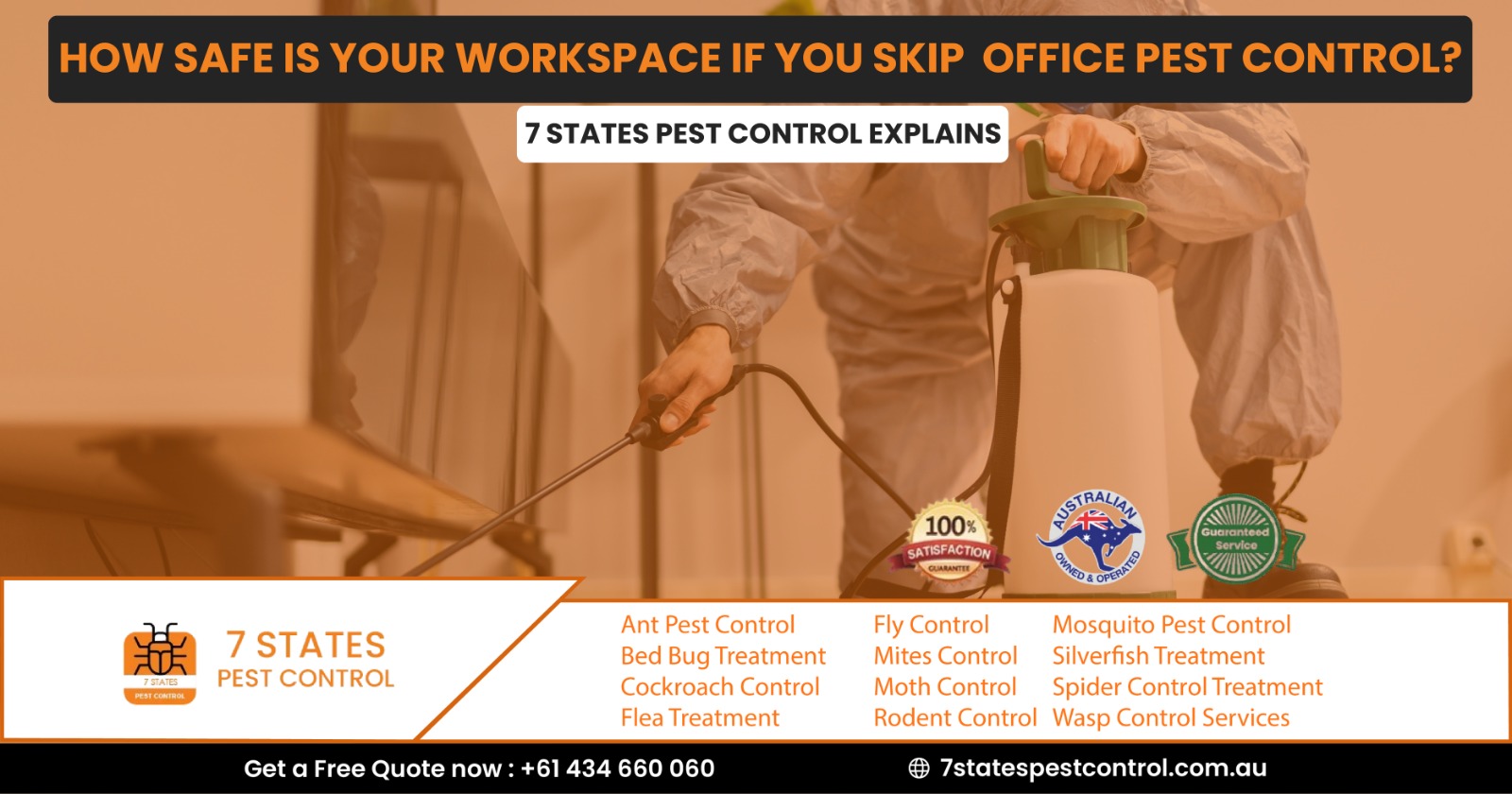
Workplace hygiene has become a major priority for Melbourne businesses, especially with the increasing focus on employee wellbeing, safety, and cleanliness. While many offices follow regular cleaning routines, one issue that is often overlooked is pest activity.
Melbourne’s changing weather, commercial construction, and dense office zones have contributed to a rise in pest problems across the city.
This leads to an important question: What really happens when an office skips regular pest control?
The truth is that ignoring the problem can lead to far more than just a few ants or an occasional rodent sighting. It can affect employee health, business operations, workplace safety, and even your organisation’s reputation.
Understanding Office Pest Problems
Office buildings in Melbourne frequently deal with pests such as:
- Rodents
- Cockroaches
- Ants
- Spiders
- Silverfish
- Pantry pests
These pests enter through a variety of access points, including:
- Underground and basement car parks
- Cracks near doors, windows, and external walls
- Pantry gaps and waste areas
- Roof voids, ceiling spaces, and air vents
- Drains and plumbing lines
Early signs are subtle. A faint scratching noise above the ceiling, droppings near storage cupboards, ant trails under desks, or strange odours in the pantry are often the first hints of activity. Unfortunately, many offices only recognise the issue once the infestation becomes more serious.
What Happens If You Skip Office Pest Control?

Failing to carry out pest control allows infestations to grow unnoticed. Once pests settle into an office environment, they reproduce quickly and hide in places that are rarely checked, including:
- Ceiling cavities
- Server rooms
- Behind printers and photocopiers
- Storage cupboards
- Carpeted corners
- Under raised access flooring
The consequences include:
Rapid pest breeding
Rodents and cockroaches multiply fast, turning minor issues into major infestations.
Structural and electrical damage
Rodents chew wiring, nibble furniture, damage insulation, and destroy documents.
This can lead to electrical faults, IT outages, and safety risks.
Increased maintenance costs
Fixing rodent-damaged wiring, repairing ceilings, replacing carpets, or disinfecting pantries can be costly.
Skipping pest control often results in higher long-term expenses compared to routine servicing.
Rodent Risks in the Workplace

Rodent activity is rising across Melbourne, particularly in commercial areas such as the CBD, Richmond, Carlton, Footscray, and industrial estates. Factors contributing to this include:
- Cooler months driving rodents indoors
- Increased food waste in shared office kitchens
- Construction activity disturbing rodent nesting sites
Rodents pose serious risks to workplaces:
- Damage to electrical systems
Chewed wires lead to server failures, power outages, and even fire hazards. - Contamination of surfaces and food areas
Rodent droppings and urine carry bacteria that can contaminate desks, kitchens, and storage areas. - Fast infestation growth
A single rodent can quickly lead to a colony. Without timely intervention, only professional melbourne rodent control services can resolve the issue effectively.
Impact on Employee Health and Productivity
Employees perform better in a clean, safe workspace. Pest problems directly affect health and productivity in several ways:
- Allergies and respiratory issues
Cockroach droppings, rodent waste, and insect fragments can trigger sneezing, asthma symptoms, and breathing difficulties. - Skin reactions
Contact with insects like ants and spiders can cause irritation or rashes. - Reduced focus and comfort
Even the presence of pests can make employees uncomfortable, distracted, or unwilling to use pantry areas or meeting rooms. - Increased sick days
Contaminated surfaces can contribute to the spread of illnesses, leading to more employees taking time off.
A pest-free office environment supports better concentration, morale, and overall employee satisfaction.
Business Reputation and Compliance Risks
A clean workplace influences how clients, partners, and visitors perceive your business.
Ignoring pest issues may lead to:
- Clients noticing pests during meetings
- Negative staff feedback
- Concerns raised by auditors or inspectors
- Potential breaches of health and safety requirements
For businesses operating in food, healthcare, childcare, or retail sectors, pests can lead to compliance issues and reputational damage. Regular pest control helps maintain hygiene standards expected by Australian workplace regulations.
Why Office Pest Control Matters More Than Home Pest Control
Offices and commercial buildings face different challenges compared to homes.
They typically have:
- Higher foot traffic, which spreads pests quickly
- Shared kitchens, meeting areas, and washrooms
- Carpeted floors that hide pest droppings
- Extensive wiring and electronics that attract rodents
Workplaces also store important documents, IT equipment, and expensive machinery.
Damage to these items can disrupt operations and incur heavy repair costs.
Professional office pest control therefore plays a crucial role in maintaining a safe, compliant workspace.
What Professional Pest Control Includes
Professional pest control for offices is a multi-step process, much more thorough than basic surface spraying. From an industry perspective, effective commercial pest management includes:
Comprehensive inspection
Professional technicians inspect ceilings, kitchens, storage, basements, and electrical areas to identify hidden pest activity.
Custom treatment planning
Each office is different. Treatment methods are tailored based on building layout, pest species, severity, and safety requirements.
Rodent control solutions for Melbourne offices
Specialist methods include:
- Tamper-proof bait stations
- Targeted traps
- Entry-point sealing
- Monitoring throughout the office
These measures are essential for long-term melbourne rodent control.
Safe, eco-friendly treatment options
Commercial-grade products are selected to be safe for employees and suitable for office use without disrupting working hours.
Regular maintenance and monitoring
Scheduled visits help prevent recurrence and maintain a hygienic environment throughout the year.
Why 7 States Pest Control Is Trusted in Melbourne
Businesses across Melbourne choose 7 States Pest Control because of:
- Specialised experience
Their team handles office and commercial pest problems regularly, giving them a deeper understanding of workplace requirements. - Advanced technology and reliable techniques
Modern tools allow for accurate detection and effective treatment. - Quick response times
They provide timely assistance to ensure pests do not spread further. - Discreet and professional service
Services are carried out with minimal disturbance to office routines. - Cost-effective maintenance plans
Regular servicing packages help businesses stay pest-free without unexpected costs.
Combined with strong knowledge of local pest behaviour and effective melbourne rodent control, these qualities make them a dependable partner for workplace hygiene.
How Often Should an Office Schedule Pest Control?
The recommended schedule for Melbourne offices is:
- General pest control every 3–6 months
- Rodent control at least quarterly, or immediately if activity is detected
- Additional checks during warmer months when insects are more active
Immediate service is required if you notice signs such as:
- Droppings
- Chewed cables
- Scratching noises in walls or ceilings
- Live pests in pantry or meeting areas
- Unusual smells near storage spaces
Routine servicing is far more effective and affordable than waiting until an infestation grows.
Skipping office pest control may seem harmless, but the long-term consequences can impact employee health, safety, and business operations. Pest infestations grow quickly and often go unnoticed until serious damage has occurred. Regular inspections and professional treatment protect your office from contamination, electrical hazards, and unnecessary repair costs.
For Melbourne businesses wanting reliable protection, regular servicing is essential.